Skip to content

Roofing SEO guide · 2026

Roofing SEO for Google, Maps and AI search.

Homeowners look for a roofer when something is already wrong: a leak, missing shingles, a storm, an adjuster on the way. This guide covers what it takes to show up for those searches in 2026, from your Google Business Profile and service pages to reviews, local links and the facts AI assistants repeat about you, plus a 90-day plan to get started.

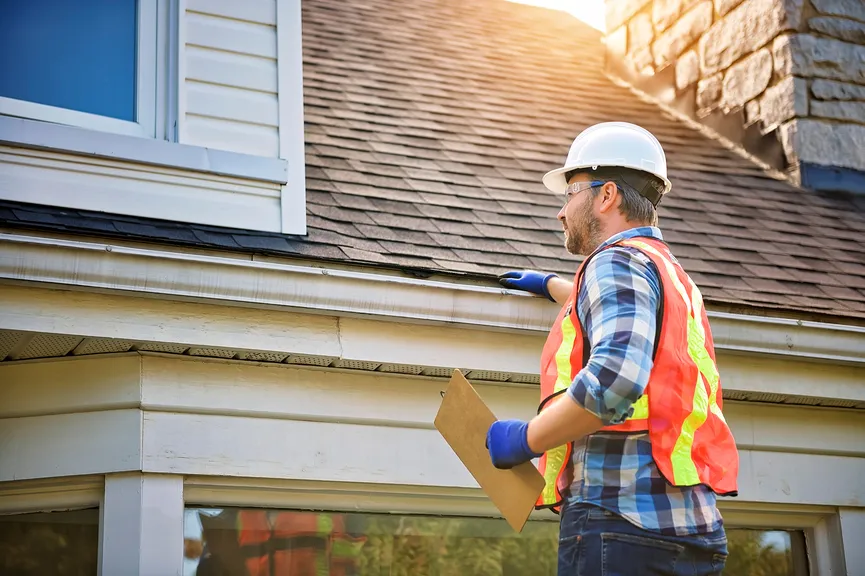
Roofer with a clipboard inspecting a home’s roofline.
Be the roofer they find first.

Roofing SEO in 60 seconds

  • What it is: roofing SEO is the work of showing up when homeowners search for roof repair, replacement or storm help in the towns you serve, on Google Search, Google Maps and AI assistants.
  • How Google picks: local results are based mainly on relevance, distance and prominence [1]. You can’t move your shop, so you win on the other two.
  • The big levers: a complete Google Business Profile with the right primary category, a dedicated page for each roofing service, a steady flow of recent reviews, and consistent listings and local mentions [16].
  • AI search: Google says there are no extra requirements to appear in AI Overviews or AI Mode [8]. AI tools pull from your website, your listings and your reviews [17], so the same work pays off twice.
  • How to judge it: by calls, inspection requests and signed jobs, not by rankings alone.

Summarize this guide with AI

Gemini and Copilot open with the prompt copied. Paste it in to start.

What is roofing SEO?

Roofing SEO (search engine optimization for roofing contractors) is the work of making your roofing company easy to find, and easy to choose, when people search online for roofing services in your area. It covers three places: the map results, which run on your Google Business Profile; the regular website results, which run on your website; and AI answers from Google AI Overviews, AI Mode, ChatGPT, Gemini and Perplexity, which pull from both.

It is not the same as the ads at the top of the page. Local Services Ads, the listings with the “Google Verified” badge, are paid by the lead. Google Verified replaced the old Google Guaranteed and Google Screened badges in 2025 [12], and starting in August 2026 Google began moving Local Services Ads into Google Ads as a pay-per-lead Performance Max campaign, with roofing in the first U.S. group [13]. Ads can work well next to SEO, but you’re renting that spot. SEO is the part you own.

Where a roofer can show up on one search. The order and mix change by search and location. Everything except the ads at the top is earned through SEO.

Why roofing SEO matters in 2026

Nobody browses for a roofer for fun. People search when they need one, and they search a lot. These are U.S. monthly search volumes for common roofing searches, pulled from Ahrefs for this guide [23]:

Monthly U.S. searches for roofing services

  1. roofing companies near me138,000
  2. roof replacement110,000
  3. roof repair near me82,000
  4. roofers near me66,000
  5. roof repair63,000
  6. roofing contractor56,000
  7. roof inspection26,000
  8. roof leak repair26,000
  9. roof replacement cost19,000
  10. storm damage roof repair14,000
  11. emergency roof repair10,000
National estimates from Ahrefs Keywords Explorer, October 2026. Your share depends on how many people live in your service area, but the pattern holds almost everywhere: urgent repair and “near me” searches lead.

Search is only half of it. Before they call, homeowners check what other people say about you, and more of them now ask an AI assistant who to hire:

97%of consumers read reviews for local businesses.
68%will only use a business with four or more stars, up from 55% in 2025.
74%look for reviews written in the last three months.
45%have used ChatGPT or other AI tools for local recommendations, up from 6% a year earlier.

Source: BrightLocal, Local Consumer Review Survey 2026, 1,002 U.S. adults [14].

Put together: homeowners search with urgent intent, they read your reviews before they pick up the phone, and a fast-growing share asks AI for a recommendation. Roofing SEO is how you show up in all three places without paying for every click.

How Google decides which roofers to show

Google says local results are based mainly on three things [1]: relevance (how well a Business Profile matches the search), distance (how far the business is from the person searching) and prominence (how well known the business is). Google also says there’s no way to request or pay for a better local ranking [1].

Relevance

How well your profile and pages match what was searched.

  • Primary category: Roofing contractor
  • Services listed in plain words
  • A page for each service

Distance

How far you are from the person searching, or the place they name.

  • You can’t change it
  • Map pack favors nearby roofers
  • Website pages reach farther towns

Prominence

How well known and trusted your company is, online and off.

  • Review count, rating and recency
  • Links and mentions from local sites
  • Listings that match everywhere
Google’s three local ranking factors, applied to roofing. Definitions from Google’s Business Profile help [1].

For more detail, look at what local SEO specialists rank highest. In Whitespark’s 2026 Local Search Ranking Factors survey of 47 experts [16], the top factors for the map pack were the primary Business Profile category, the searcher’s distance from the business, keywords in the business name, a physical address in the city being searched, and whether the business is open at the time of the search. For the regular website results, the top factors were a dedicated page for each service, content relevant to the city or neighborhood, and the quality of links pointing to the site.

About keywords in your business name: it’s a known ranking signal, but adding words that aren’t part of your real name, like “Best Roof Repair Dallas,” breaks Google’s guidelines [2] and can get your profile suspended. If “Roofing” is in your legal name and on your trucks, great. If it isn’t, don’t add it.

Step 1: Get your Google Business Profile right

Your Google Business Profile is what shows up in the map pack and the right-hand panel when someone searches your name. For most roofers it brings in more calls than any single page on the website. Get these right first:

  • Use your real business name. Google doesn’t allow adding service or location details to the name [2].
  • Set “Roofing contractor” as your primary category. Add secondary categories only for work you really do. Google’s advice is to use as few categories as possible, and says the categories you pick affect your local ranking [4].
  • Service-area business? If customers don’t come to your office, hide the address. You can list up to 20 service areas, kept within about two hours’ drive of your base [3].
  • List every service in plain words: roof replacement, roof repair, storm damage repair, roof inspection, gutters, and anything else you sell.
  • Keep hours accurate, including emergency hours if someone really answers the phone.
  • Add real photos regularly: jobs in progress, finished roofs, crews and trucks. Skip stock photos.
  • Match your website: the same business name, phone number and address or service area.

Then do the same on the other maps. Bing Places for Business can import your listing from Google [21], and Apple Business (formerly Apple Business Connect) puts you on Apple Maps [22]. Each takes about an hour, and both feed results outside Google.

Roofer using a tablet while kneeling on a metal roof.

Step 2: Build a website Google and homeowners trust

Your Business Profile gets the call from people nearby. Your website does the rest: it ranks for searches the map doesn’t cover, it reaches towns farther from your shop, and it’s where homeowners decide whether you look like the right company for one of the biggest repairs they’ll ever pay for. A strong roofing website has:

  • Speed and stability. Google’s Core Web Vitals targets are a Largest Contentful Paint within 2.5 seconds, an Interaction to Next Paint of 200 milliseconds or less, and a Cumulative Layout Shift of 0.1 or less [10].
  • A tap-to-call phone number and a short inspection request form on every page, easy to use on a phone.
  • Trust details homeowners look for: your license number where your state requires one, insurance, manufacturer certifications, warranties, years in business and photos of your own work.
  • Technical basics: HTTPS, one page per topic, an XML sitemap submitted in Google Search Console, and no accidental blocks on search crawlers.

Add structured data so search engines can read your business details without guessing. Schema.org has a specific type for this, RoofingContractor [11]. A basic version looks like this:

{
  "@context": "https://schema.org",
  "@type": "RoofingContractor",
  "name": "Your Roofing Company",
  "url": "https://www.example.com/",
  "telephone": "+1-555-555-0100",
  "areaServed": ["Town One", "Town Two", "Town Three"],
  "openingHours": "Mo-Fr 07:00-18:00",
  "sameAs": [
    "https://www.facebook.com/yourpage",
    "https://www.yelp.com/biz/your-listing"
  ]
}

Structured data helps search engines understand you, but it isn’t a ranking shortcut, and Google says no special markup is needed to appear in its AI features [8].

Step 3: One page for every roofing service

A single “Services” page with a bulleted list can’t rank for roof repair, roof replacement and storm damage all at once. Each of those is a separate search with its own intent, and “a dedicated page for each service” was the top factor for local website rankings in Whitespark’s 2026 survey [16]. Most roofers need pages for:

  • Roof replacement
  • Roof repair & leak repair
  • Storm & hail damage
  • Insurance claim help
  • Roof inspections
  • Emergency repair & tarping
  • Metal roofing
  • Flat & commercial roofing
  • Gutters

Build each one around what a homeowner needs to decide, not around a keyword count:

  1. Clear headline. The service and the area you cover.
  2. Short answer first. What the service is, who it’s for and what drives the price.
  3. Real project photos. Before and after, from your own jobs.
  4. Process and timeline. Inspection to cleanup, step by step.
  5. Materials and brands. What you install and why.
  6. Warranty and financing. In plain words.
  7. Reviews about this service. From real customers.
  8. FAQs. The questions you hear on the phone.
  9. Call and estimate form. Visible on every screen size.
Anatomy of a roofing service page. One page per service, built around what a homeowner needs to decide.

Lead each page with a two- or three-sentence answer, written the way homeowners talk: “roof leak,” “hail damage,” “insurance adjuster.” That opening is what both Google and AI assistants are most likely to quote. When it comes to cost, give honest ranges for your market and explain what moves the price (size, pitch, layers to tear off, materials, decking repairs) rather than one number that will be wrong for most homes.

Step 4: Town pages without doorway pages

Town pages can help you show up in places farther from your shop, but the usual shortcut backfires. Google’s spam policies name doorway pages as a violation, including “multiple domain names or pages targeted at specific regions or cities that funnel users to one page” [6]. Fifty copies of the same page with the city name swapped is exactly that.

Build a town page only when you have something real to say about the town:

  • Roofs you’ve replaced or repaired there, with photos and the homeowner’s permission.
  • What’s local: permit rules, HOA requirements, common roof types in older neighborhoods, hail or wind exposure.
  • Reviews from customers in that town.
  • Links to your main service pages and an “Areas we serve” page that lists every town you cover.

Start with your core towns, the ones with the most past jobs and the shortest drive, and add more as you collect projects. Our guide to service area SEO for contractors walks through choosing and building them.

Step 5: Earn steady, recent reviews

Reviews count toward prominence in Google’s local results [1], and they’re what homeowners read before they call. BrightLocal’s 2026 survey found that 89% of consumers expect business owners to respond to reviews and 74% look for reviews from the last three months [14]. A burst of reviews two years ago doesn’t do much today. What works is a habit:

  1. Finish the jobWalk the homeowner through the work and the cleanup.
  2. Send the link the same dayA text with your direct Google review link.
  3. Customer writes itIn their words. Many will mention the town and the job.
  4. Reply within a few daysThank them, or address the problem calmly.
  5. Next homeowner sees itFresh, answered reviews help win the next call.
The review loop. Ask every customer, every time. Steady and recent beats a one-time push.

Two rules keep that habit safe. Google prohibits paying or rewarding customers for reviews, posting reviews from employees or family, and asking only the customers you expect to be happy [5]. And the FTC’s rule on fake reviews, in effect since October 21, 2024, bans fake reviews, buying positive or negative reviews, undisclosed reviews from insiders and suppressing negative reviews [18], with civil penalties of up to $53,088 per violation [19]. Ask everyone, reward no one, and answer every review in your own voice.

Reviews on other sites matter too, especially for AI search. In BrightLocal’s 2026 study of nearly two million AI citations, Yelp appeared as a source in 80% of ChatGPT answers about local businesses [15]. Keep your Yelp, BBB, Angi, Facebook and Nextdoor profiles current and point some happy customers there as well.

Person on a phone with local business listings and star ratings above it.

Step 7: Answer the questions homeowners search

Before a homeowner searches “roofers near me,” they often search the problem: what a new roof costs, whether insurance will pay, how long their roof should last. Answering those questions well puts your name in front of them early, gives AI assistants something to quote, and gives your crew a page to text a homeowner who asks the same thing on site.

Homeowner questions worth a page or guide (U.S. monthly searches, Ahrefs, October 2026)
SearchVolumeWhat to publish
roof replacement cost19,000A cost guide with real ranges for your market and what moves the price.
how much does a new roof cost7,600Same page as above; answer it in the first paragraph.
how long does a roof last5,300Lifespan by material, plus the signs it is time to replace.
metal roof cost4,900Metal vs. shingle: cost, lifespan, noise, resale questions.
roof financing4,300Your financing options, terms and how to apply.
hail damage roof3,300How to spot hail damage and what an inspection covers.
signs you need a new roof800A checklist with photos from your own inspections.
does homeowners insurance cover roof replacement700How claims usually work and where you help.

Write from your own jobs: the ranges you actually see, the photos from your inspections, the questions adjusters ask. Google’s guidance is to create content “primarily for people, and not to manipulate search engine rankings” [7], and its spam policies warn against mass-producing pages that add little value, however they’re made [6]. If you prepare storm content, do it before the season, for the areas you really serve.

Step 9: Measure calls and jobs, not just rankings

Map rankings change with where the searcher is standing, so a single rank check tells you very little. Measure what reaches your office instead:

What to trackWhere to find it
Calls, direction requests and website clicks from your profileGoogle Business Profile performance
Searches and clicks for each pageGoogle Search Console
Form submissions by page and sourceGoogle Analytics 4
Calls by source (Maps, website, ads)Call tracking
Map visibility across your service areaA grid-based local rank tracker
Inspections booked, jobs signed and revenue by sourceYour CRM or job management software

Review it once a month. If a page brings calls but few signed jobs, it may be attracting the wrong projects. If a core town sends nothing, its page needs more local proof. The number that matters most is cost per signed job by source.

How to start: your 90-day roofing SEO plan

You don’t need to do everything at once. Here is the order we’d follow for a roofing company starting from a basic website and an unoptimized profile:

Days 1–30

Foundation

  • Audit and fix your Google Business Profile: name, category, services, service area, hours, photos.
  • Set up call tracking, Google Analytics 4 and Search Console.
  • Fix site speed, phone layout and tap-to-call.
  • Write or rebuild your three most valuable service pages, usually replacement, repair and storm damage.
  • Start asking every customer for a review.
Days 31–60

Coverage

  • Finish the rest of your service pages.
  • Claim and clean up Bing Places, Apple Business, Yelp, BBB, Angi and your manufacturer listings.
  • Add RoofingContractor structured data.
  • Build one or two town pages for core towns with real projects.
  • Post job photos to your Business Profile every week.
Days 61–90

Authority

  • Publish two or three homeowner guides: cost, insurance claims, signs of damage.
  • Go after local links: suppliers, sponsorships, the chamber, local news.
  • Run your first AI visibility check.
  • Send your first monthly report: calls, inspections and signed jobs by source.
A 90-day roofing SEO plan. After day 90: new reviews and photos every week, one new page or guide a month, and a monthly look at calls and signed jobs.

Set expectations honestly. Fixing a Business Profile can show up in the map results fairly quickly; service pages, reviews and links build over months, and how fast depends on your competition. Be wary of anyone who promises a spot. Google’s own guidance on hiring an SEO says it plainly: “No one can guarantee a #1 ranking on Google” [9].

Common roofing SEO mistakes

  • Keyword-stuffed business names like “Best Roofer Roof Repair Dallas.” Against Google’s guidelines [2].
  • Fake or virtual offices to appear in more towns. A fast way to lose a profile.
  • Copy-and-paste city pages with only the town name changed [6].
  • Buying reviews or rewarding them, or asking only happy customers [5].
  • Stock photos instead of your own jobs. Homeowners and Google both notice.
  • One page for all your services. Each service needs its own page.
  • No call tracking, so nobody knows which work brings in jobs.
  • Storm pages for places you don’t serve. They bring calls you can’t take.

Doing it yourself vs. hiring help

Plenty of roofers handle the basics themselves: the Business Profile, review requests and photos. The heavier lifting, like service pages, technical fixes, structured data, links and tracking, is where most owners either block out real time every week or hire help. If you hire, ask these questions:

  • Who owns the Business Profile, website, domain and accounts? You should.
  • How will you report? Calls, inspections and signed jobs, not only rankings.
  • What exactly will you build in the first 90 days?
  • How do you get reviews and links? If the answer involves buying either, walk away.
  • Do you guarantee rankings? The right answer is no. Google warns to beware of SEOs that claim to guarantee rankings [9].

Roofing SEO FAQ

How long does roofing SEO take to work?

Fixes to your Google Business Profile can show up in the map results within weeks. Service pages, reviews and links usually take several months to build momentum, and the timeline depends on how many roofers compete in your area and how strong their websites are. Be cautious of anyone who promises a ranking by a date: Google says no one can guarantee a #1 ranking.

How much does roofing SEO cost?

It depends on how much you do yourself and how competitive your market is. The basics, like your Business Profile, review requests and job photos, cost mostly time. Agencies usually charge a monthly fee that covers pages, technical work, links and reporting. The better comparison is cost per signed job from SEO versus from ads or lead services.

Are Google Local Services Ads part of roofing SEO?

No. Local Services Ads are paid by the lead and carry the Google Verified badge. In August 2026 Google began moving them into Google Ads as a pay-per-lead Performance Max campaign, starting with roofing and other home services in the U.S. They work well alongside SEO, but they stop when you stop paying.

Do roofers need a separate page for every city?

No. Build a page for a town when you have real local work to show there: projects, photos, reviews and local details. Near-identical city pages can count as doorway pages under Google’s spam policies and can hurt the whole site.

Can I rank in towns where I don’t have an office?

Yes, but mostly through your website. The map pack strongly favors businesses close to the searcher. Service pages, genuine town pages with local projects, reviews from those towns and local links are how roofers reach farther. A service-area business can list up to 20 service areas in its Business Profile, within about two hours’ drive of its base.

What matters most for roofers in the Google map pack?

In Whitespark’s 2026 survey of local SEO experts, the top map factors were the primary Business Profile category, the searcher’s distance, keywords in the business name, a physical address in the searched city and being open at the time of the search. Reviews and other prominence signals matter too. Choose “Roofing contractor” as your primary category and keep your real business name.

How do I get my roofing company recommended by ChatGPT and other AI tools?

Make your business facts consistent across your website and listings, keep your Google, Bing, Apple, Yelp and BBB profiles complete, earn reviews on more than one platform, put clear answers at the top of your pages, and don’t block OpenAI’s search crawler, OAI-SearchBot, in robots.txt. Then check every month what AI tools say about you and fix wrong facts at the source.

Can I use AI to write my roofing website content?

Google’s guidance focuses on whether content is helpful and reliable for people, and its spam policies target mass-produced pages that add little value. If you use AI to draft, add what only you know: your real price ranges, your photos, your process and the questions your customers ask.

Sources

We link every fact in this guide to the page it came from. Search volumes are Ahrefs estimates for the United States.

  1. Google Business Profile Help: Tips to improve your local ranking on Google
  2. Google Business Profile Help: Guidelines for representing your business on Google
  3. Google Business Profile Help: Service areas for service-area businesses
  4. Google Business Profile Help: Business categories
  5. Google Maps User Contributed Content Policy: Prohibited and restricted content
  6. Google Search Central: Spam policies for Google web search
  7. Google Search Central: Creating helpful, reliable, people-first content
  8. Google Search Central: AI features and your website
  9. Google Search Central: Do you need an SEO?
  10. web.dev: Web Vitals
  11. Schema.org: RoofingContractor
  12. Google: Google Verified makes it easier to find trusted local businesses (August 20, 2025)
  13. Google Ads Help: Local Services Ads moving to Google Ads (2026)
  14. BrightLocal: Local Consumer Review Survey 2026 (February 11, 2026)
  15. BrightLocal: Top sources and directories for local AI search (August 26, 2026)
  16. Whitespark: Local Search Ranking Factors 2026 (November 6, 2025)
  17. Yext Research: 86% of AI citations come from brand-managed sources (October 9, 2025)
  18. Federal Trade Commission: Final rule banning fake reviews and testimonials (August 14, 2024)
  19. Federal Trade Commission: FTC warns 10 companies about possible violations of the Consumer Review Rule (December 22, 2025)
  20. OpenAI: Overview of OpenAI crawlers
  21. Microsoft Bing: Introducing the new Bing Places for Business (October 2025)
  22. Apple Business
  23. Ahrefs Keywords Explorer: U.S. search volumes pulled by ECHVO, October 2026
  24. Google Search Central: Preferred sources

See more ECHVO guides in Google

Add ECHVO as a preferred source, and Google will be more likely to show our articles in Top Stories when they’re relevant to your searches [24].

Add ECHVO as a preferred source on Google

Free roofing SEO audit

Where is your roofing
company losing calls?

We’ll check your Google Business Profile, service pages, reviews and local rankings for the towns you serve, then show you what to fix first. No cost, no obligation.

Get your free roofing SEO audit

Send your website and the towns you want more roofing jobs from.

By submitting this form, you agree that ECHVO may call and email you at the phone number and email you provide about your request and our services, including with automated technology. Consent is not a condition of purchase.

Thank you. Your request has been sent, and we’ll be in touch to find a time to talk.

Something went wrong while sending your request. Please try again, or email info@echvo.com.